
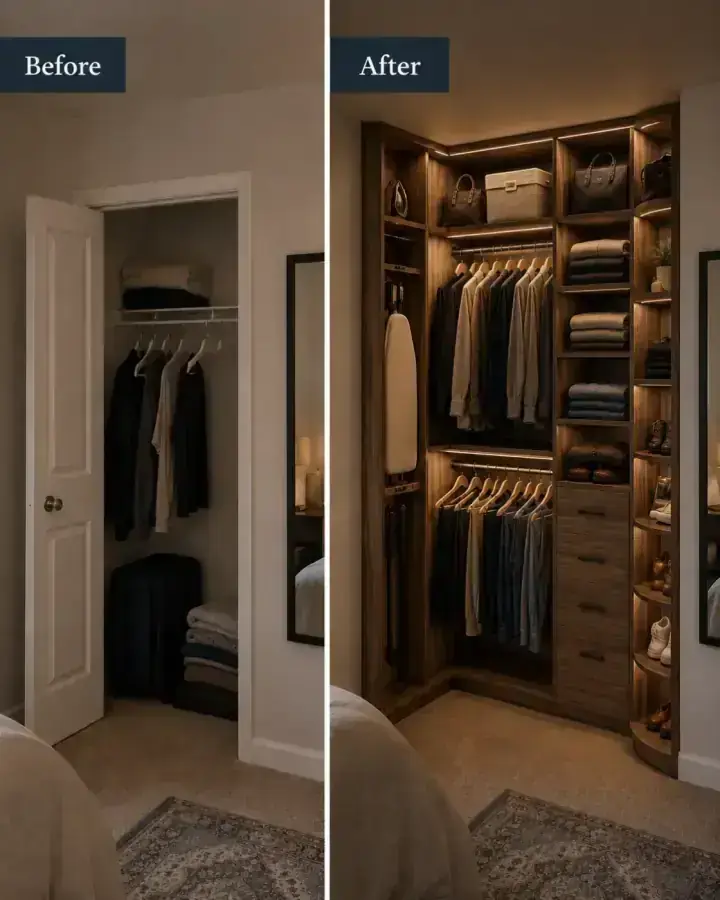
Athletic wear is the fastest-growing wardrobe category in American households. For active Quad Cities families — runners, cyclists, swimmers, golfers, youth sports parents, gym regulars — athletic wear can easily outnumber traditional clothing.
A closet designed for an athlete has different proportions and different features than one designed for a business professional. Here is what that looks like.
Athletic Wear Storage: The Core Challenge
Athletic wear does not hang well. Most performance fabrics stretch or deform on hangers, and athletic clothes are bulky relative to traditional folded garments. Yet they are used frequently — often daily.
The best storage for most athletic wear is folded in open shelving or drawer sections where pieces are visible and accessible. A drawer categorized by workout type (running, gym, cycling, swimming) makes picking the right kit fast.
For longer athletic items — leggings, pants, compression gear — a hanging section at short-hang height works, or a folded section with enough depth for the bulk of compression fabrics.
Gear Storage: Not in the Bedroom Closet
Helmets, shoes, bags, and specialty equipment for cycling, running, swimming, and other sports should not compete for space in a bedroom closet. The better approach is a dedicated gear storage area near the garage or entry point — a mudroom section or garage wall section where gear lives between uses and is accessible on departure without going through the bedroom.
The Sports Wardrobe vs. The Dress Wardrobe
Active families often have a significant divide between athletic wear and professional or formal clothing. A closet for this household needs to serve both categories well.
Dedicated sections for each — clearly separated — allow each category to be stored at its appropriate density. Athletic wear at higher density in folded sections, professional clothing in single-hang or double-hang at appropriate spacing.
Shoe Storage for Athletic Families
Athletic shoe collections grow quickly: running shoes, gym shoes, cleats, cycling shoes, hiking boots, casual sneakers, dress shoes. A dedicated shoe section with flat or angled shelves at 8 to 12 inches per pair needs to be sized for the full collection — not just the current season's active pairs.
Getting Started
Comfort Concepts QCA designs custom closets for Quad Cities homeowners with every type of wardrobe — including athletes and active families who need storage that keeps up with their lifestyle. Free in-home consultation at (563) 355-8295.