
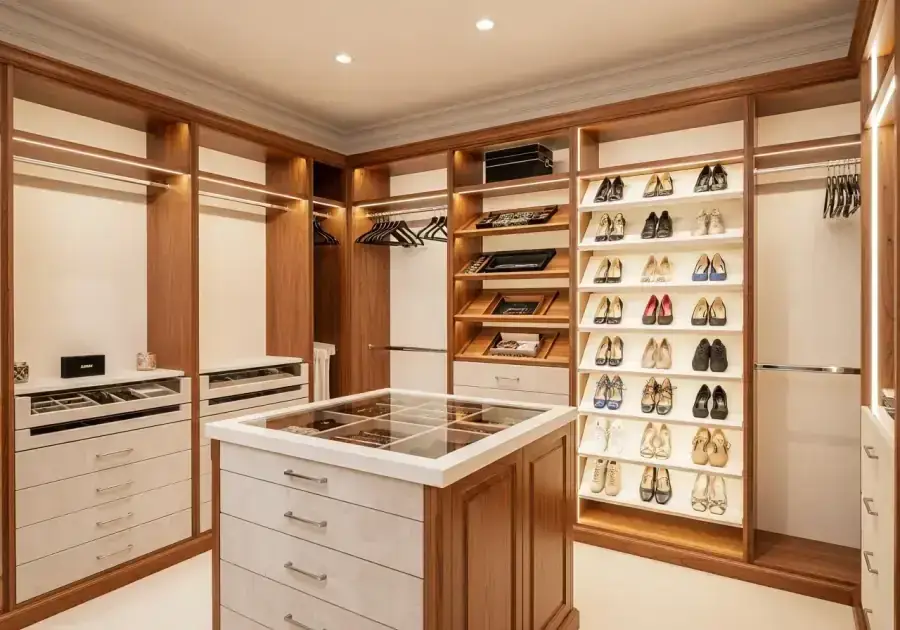
Closet rods seem like a commodity — a rod is a rod. But the type of rod, the mounting hardware, and the support spacing all affect how well a closet functions. Here is a practical guide.
Round Chrome Rod
The most common closet rod — 1.25-inch diameter, chrome finish. Works well for standard hanging sections up to about 60 inches between support brackets. Easy to source and replace.
Use when: Standard hanging sections where the rod is not visible as a design element.
Oval Chrome Rod
Stronger than round at the same diameter — the oval shape provides more rigidity across longer spans. Better for sections 48 to 72 inches long where a round rod might flex or bow under a full load.
Use when: Longer hanging sections with heavy garments. The oval profile also allows clothes to hang very slightly closer together.
Wooden Rod
A 1.5-inch diameter wood rod — dowel or turned wood — provides a warmer aesthetic than chrome. Common in traditional and farmhouse closet designs where the natural wood finish contributes to the overall look.
Use when: Closets with a traditional or natural design direction where the rod is part of the visible aesthetic. Slightly less durable than chrome for very heavy loads.
Valet Rod
A short (12 to 18-inch) retractable rod that pulls out from a panel. Used for laying out tomorrow's clothing, organizing newly dry-cleaned garments, or temporary hanging during dressing.
Use when: Adding a specific accessory function to a primary closet. Most useful for people who plan outfits the day before.
Support Bracket Spacing
All rod types require support brackets at regular intervals — maximum 36 to 48 inches between brackets. At longer spans, any rod will bow under a full load of clothing. We specify and install support brackets at appropriate intervals in every installation.
Comfort Concepts QCA specifies the right rod type for each application in every custom closet design. Free consultation at (563) 355-8295.