
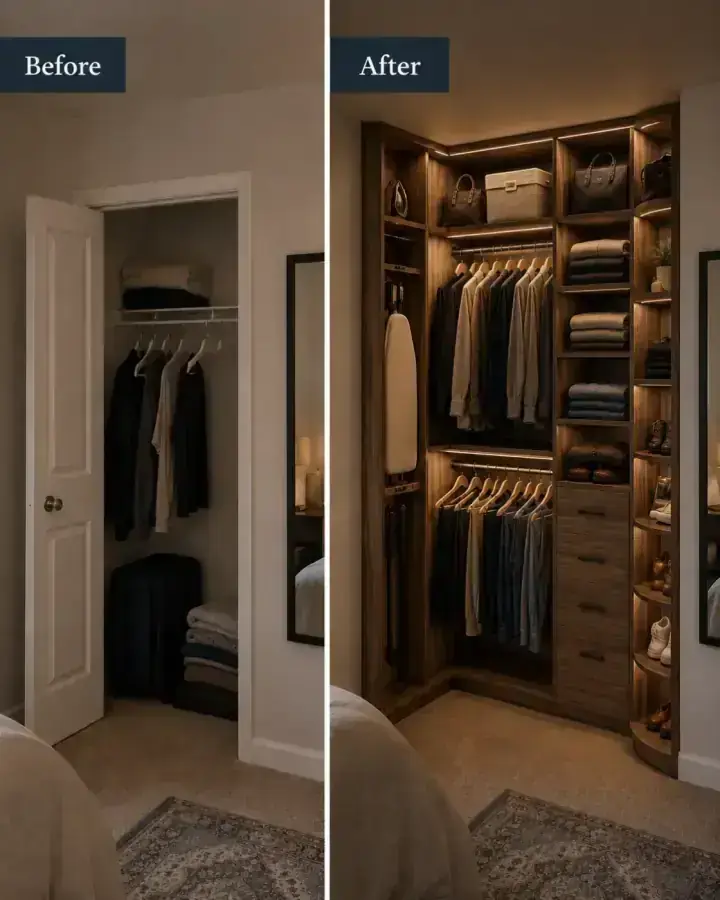
One of the most valuable things you can do before a custom closet consultation is count your wardrobe. Not approximately — specifically. The number of hanging items, the breakdown between short-hang and long-hang, the number of shoes, the number of drawers worth of folded items.
This information directly determines how much of each storage type you need, which drives the design. A closet designed with accurate wardrobe data serves the actual wardrobe. A closet designed without it is an estimate that may or may not fit.
Here is exactly how to do a wardrobe audit.
Step 1: Count Hanging Items
Go through your closet and count every item that currently hangs. Then separate them into:
Short-hang items (24 to 42 inches of drop): Shirts, blouses, blazers, jackets, folded pants hung on a hanger, and similar items. These use the upper rod in a double-hang section.
Long-hang items (42 to 66 inches of drop): Dresses, gowns, long skirts, suits hanging full-length, robes, and overcoats. These need a single full-height hang section.
Write down the count for each category. A standard 4-foot double-hang section holds approximately 40 to 50 short-hang items. A 4-foot single-hang section holds 20 to 25 long-hang items.
Step 2: Count Shoes
Count every pair of shoes you own — including shoes currently stored in boxes, under the bed, or in other rooms because the closet is too full.
A standard shoe shelf (flat) holds one pair per 12 to 14 inches of width. An angled display shelf holds one pair per 8 to 10 inches and shows the shoes more clearly.
Step 3: Assess Folded and Drawer Storage
Estimate how many drawer units you need. A standard 4-drawer unit (22 inches wide, each drawer 4 inches tall) holds approximately 30 to 40 folded t-shirts, or 12 to 15 sweaters, or 20 to 25 pairs of jeans and pants.
If you have an extensive folded wardrobe, count by category:
- T-shirts and casual tops
- Jeans and pants (folded)
- Sweaters
- Underwear and socks (typically 1 shallow drawer per person)
- Athletic wear
Step 4: Note Your Accessories
Handbags, hats, belts, ties, and scarves all need dedicated space. Note how many of each you own. Handbags need display shelving or dedicated cubbies. Ties and belts benefit from a pull-out rack.
What to Bring to Your Consultation
Write your counts down and bring them. Your designer will appreciate the specificity and your closet will be designed more accurately as a result.
You do not need to have exact counts — reasonable estimates are fine. The goal is better information than "I have a lot of stuff."
At Comfort Concepts QCA, we also walk through the wardrobe audit together during the free consultation if you prefer not to do it in advance. Either way, the design benefits from the most accurate information available. Call (563) 355-8295 to schedule.