
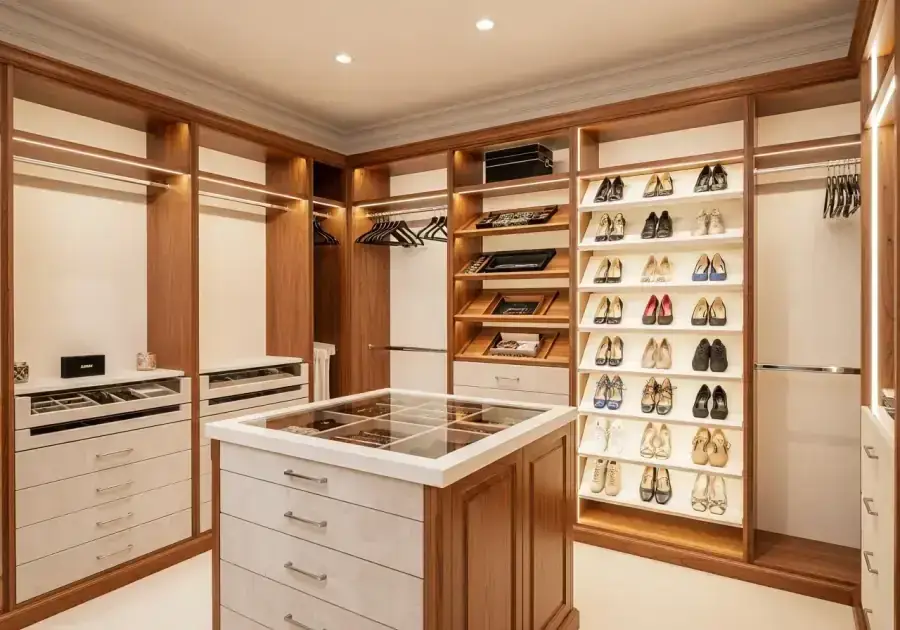
The closet that worked for a 10-year-old rarely works for a 16-year-old. The wardrobe has grown. The categories have expanded — formal wear, sports uniforms, athletic wear, casual clothing, school clothing. The shoe collection has multiplied. And the teenager has very definite opinions about how their stuff is organized and whether they can find it.
Here is how to design a teenage bedroom closet that actually works.
Wardrobe Audit for Teens
The most important step in designing a teen closet is understanding the actual wardrobe. Teenage wardrobes vary enormously — a theater-focused teen has very different storage needs from a varsity athlete, who has different needs from a teen whose primary interest is gaming.
Ask: How many items hang? What is the ratio of formal/dressed clothing to casual clothing to athletic wear? How many shoes? Any accessories (sports equipment, bags, jewelry) that need storage? This information determines the layout proportions.
The Athletic Wear Challenge
Athletic wear is the fastest-growing wardrobe category for active teens. Jerseys, shorts, leggings, and performance fabrics do not hang well and take up significant space when folded in a standard shelf. A drawer section specifically for athletic wear — deep enough for compression fabrics without crushing them — is the most efficient storage.
For sports uniforms that do need hanging (lacrosse pinnies, soccer jerseys), a dedicated short-hang section keeps them separate from regular clothing and visible before game days.
The Formal Wardrobe Section
Prom, graduation, formal events — teenagers need a full-hang section for formal dresses, suits, and dress shirts. This section can be a smaller proportion of the overall closet but needs to accommodate full-length formal wear without crushing.
Shoes: The Volume Problem
Teenage shoe collections grow quickly — basketball shoes, cleats, casual shoes, dress shoes, and the rotating fashion footwear. Dedicated shoe shelving with enough capacity for the actual shoe count is critical.
Privacy and Independence
Teenagers value control over their own space. A closet system that makes sense to the teen — that they had input into, that reflects how they actually use their wardrobe — is one they will maintain. Designs imposed without teen input rarely survive the first semester.
Comfort Concepts QCA involves the teen in the design process when the closet is for their room. Free in-home consultation at (563) 355-8295.