
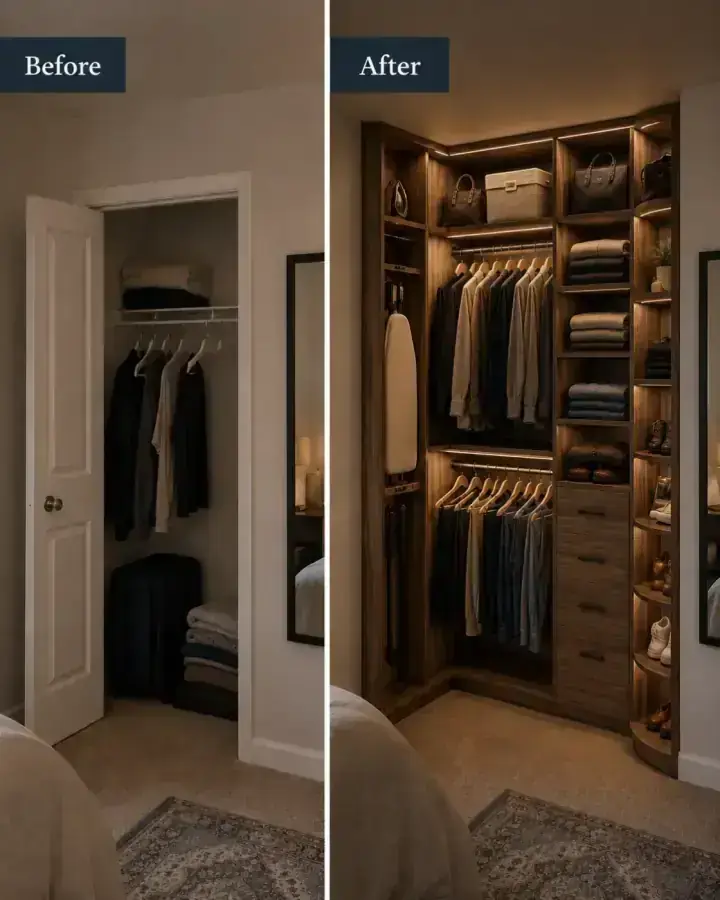
The Quad Cities has four real seasons, which means four different wardrobes. Summer clothes in January take up space needed for winter sweaters. Winter coats in July block access to summer dresses. A primary closet holding all seasons simultaneously is perpetually overcrowded, no matter how well it is designed.
A seasonal rotation system solves this permanently.
The Core Concept
A seasonal rotation divides your wardrobe into: active season (in the primary closet) and stored season (in secondary storage). At the change of each season, the stored season comes out and the departing season goes in.
The primary closet holds only the current season's wardrobe at appropriate spacing. The secondary storage holds the off-season wardrobe in an organized, accessible system.
Identifying Your Secondary Storage Location
The most functional secondary storage locations, in order of preference:
- A guest bedroom closet. Climate-controlled, accessible, and out of the primary bedroom. A guest closet can hold off-season clothing in organized hanging and shelving sections that do not interfere with guest use (most guests do not need the full closet).
- A dedicated storage closet. A hall closet or utility closet redesigned with hanging and shelving for off-season clothing.
- A basement clothing storage section. A finished basement section with hanging and shelving, in a climate-controlled area. Avoid unfinished or damp basements where moisture can damage clothing.
- Vacuum storage bags on high shelves. For bulk items like sweaters and heavy knitwear, vacuum storage bags compress dramatically and can go on high closet shelves that are otherwise underutilized.
The Rotation Process
When transitioning between seasons:
- Remove off-season items from the primary closet
- Wash or dry-clean anything that was worn and needs cleaning before storage
- Move clean off-season items to secondary storage
- Bring stored current-season items into the primary closet
- Note any items that did not get worn last season and consider whether to keep them
How Custom Storage Supports Rotation
A custom primary closet with appropriate capacity for one season's wardrobe — rather than overcrowded with all seasons — is the starting point. Secondary storage with proper hanging sections and shelving makes the off-season organization functional rather than chaotic.
Comfort Concepts QCA can design both the primary closet and the secondary storage system as coordinated parts of a whole-home storage plan. Call (563) 355-8295 for a free consultation.