
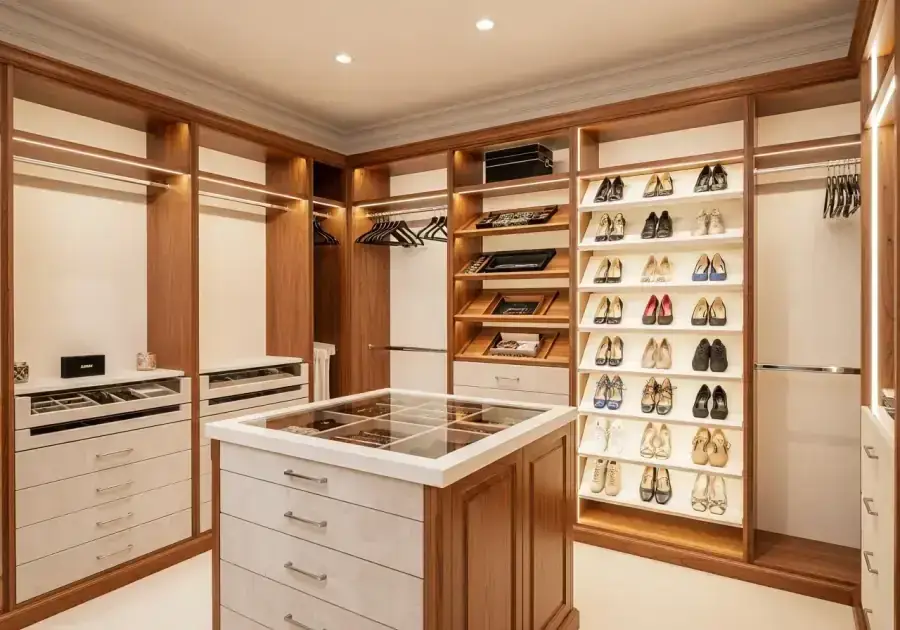
One of the most commonly specified details in a custom closet is shelf depth — and most standard systems get it wrong by using one depth for everything.
The right depth for a shelf depends on what it holds. Here is a practical guide.
Folded clothing shelves: 12 to 14 inches. A folded sweater or a stack of jeans does not need more than 12 inches of depth. Deeper shelves for folded clothing simply push items back, making them harder to reach without disturbing the stack in front.
Shoe shelves (flat): 10 to 12 inches. Most shoes fit comfortably on a 10-inch shelf. Extra depth is wasted and makes shoes harder to retrieve.
Shoe shelves (angled/pitched): 8 to 10 inches. Angled shoe shelves need less depth because the toe of the shoe is elevated.
Hanging sections: 24 inches minimum. Hanging clothes need 24 inches of depth to hang freely without the garment touching the cabinet back. 24 to 28 inches is the standard for hanging sections in a reach-in or walk-in closet.
Purse and bag shelves: 14 to 18 inches. Larger bags and structured purses need more depth than folded clothing. 14 inches for most bags; 18 inches for oversized bags and luggage.
Accessory and hat shelves: 10 to 12 inches. Hats and accessories do not need deep shelving.
Upper seasonal storage: 14 to 16 inches. Seasonal items on upper shelves are often bulky (sweaters, blanket storage). 14 to 16 inches allows for this without creating so much depth that items fall behind each other.
At Comfort Concepts QCA, we specify shelf depth for every section based on what that section holds — resulting in a closet where everything is appropriately contained and easily accessible. Free consultation at (563) 355-8295.